April 14, 2026 • Celeste Marchand • 9 min reading time • Prices verified June 6, 2026
From $22 to $115: Which Truffle Gift Box Is Actually Worth the Price
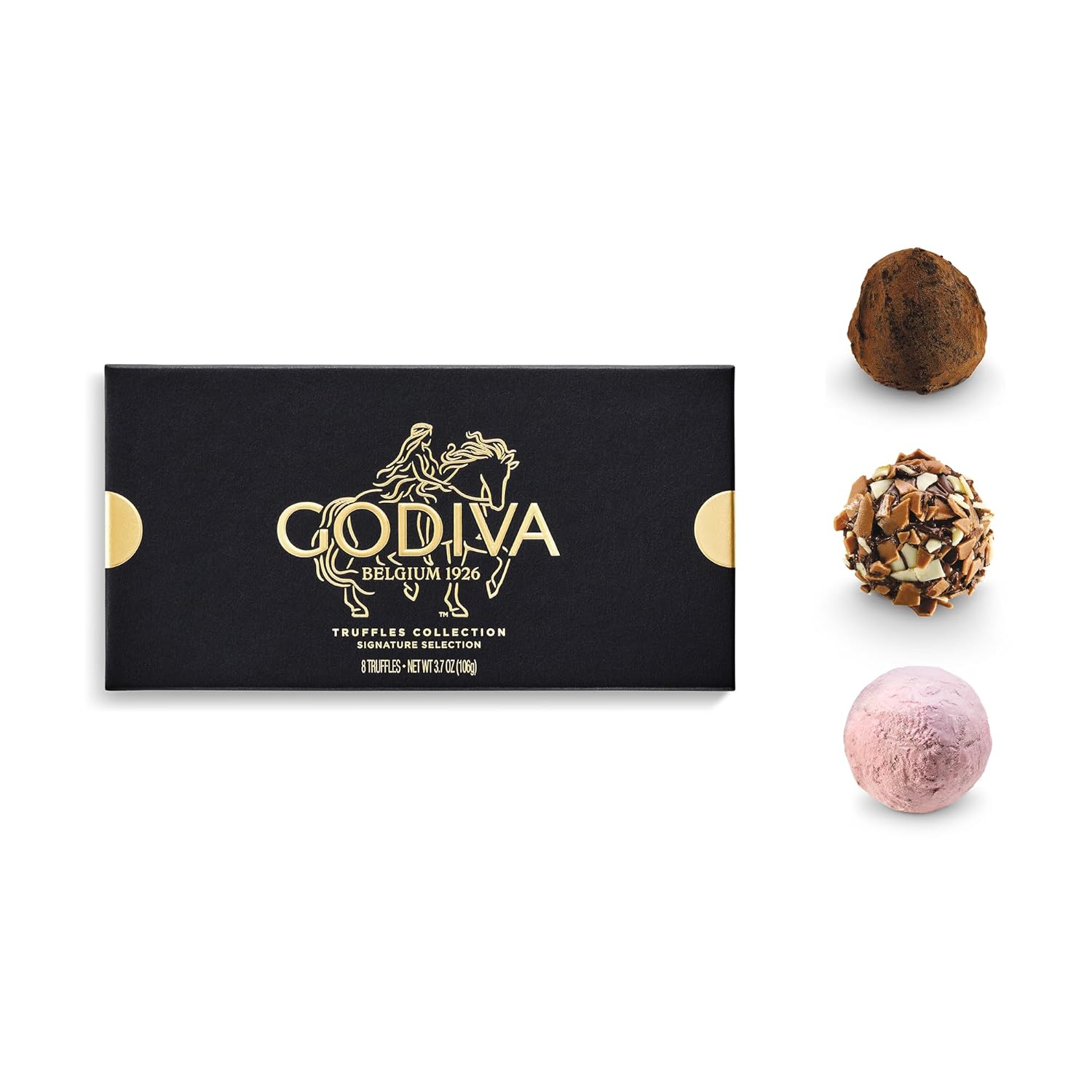
A truffle, in the chocolate sense, is a small round or hand-formed confection built around a ganache — that’s the silky, fudge-like filling made by blending melted chocolate with cream. The outside is usually coated in more chocolate, cocoa powder, or chopped nuts. Truffles are called truffles because the originals, dusted in cocoa powder, looked vaguely like the lumpy black fungi chefs pay fortunes for. No fungi involved. The gifting question is simple on the surface: you want a beautiful box that tastes as good as it looks. The answer, unfortunately, is not simple at all — because the $22 box at the grocery store checkout and the $115 box from an artisan chocolatier can look almost identical in a photo, but taste completely different and communicate completely different things to the person who receives them. This guide walks you through what actually separates the tiers, so you can match your budget to the right box for the right occasion without second-guessing yourself at checkout.
What You’re Actually Paying For When Price Goes Up
Let’s be direct: a higher price tag on a truffle box doesn’t automatically mean better chocolate. It often does — but the reason it does matters for your buying decision.
Ingredient quality is the first driver. Mass-market truffles typically use compound chocolate (real cocoa butter replaced partly or entirely with vegetable fat) or couverture chocolate blended from commodity cacao with no origin story. Artisan boxes use couverture (high-quality chocolate with a higher percentage of real cocoa butter, which gives a cleaner snap and melt) made from named-origin cacao — sometimes single-estate beans from Ecuador, Madagascar, or Vietnam. That sourcing costs more.
Labor and batch size are the second driver. A factory line can produce thousands of identical truffles per hour. A small chocolatier hand-pipes ganache, dips each piece individually, and works in weekly batches. Serious Eats’ overview of artisan ganache production notes that small-batch hand-dipping alone can triple per-unit labor cost versus automated enrobing.
Freshness and shelf life are the third — and most underrated — driver. A ganache truffle at its best has a shelf life of two to five weeks if kept cool. Mass-market boxes extend shelf life with preservatives and lower cream ratios. Artisan boxes ship fresh and come with a “best by” date that actually means something. This is why where you buy matters almost as much as what you buy: a premium chocolatier’s truffle shipped overnight in cold packaging is a different product than the same brand’s truffle sitting in a warm distribution center for ten days.
The Chocolate Life’s maker forums consistently surface this point: ganache stability (and thus flavor fidelity) is a function of water activity, cream fat content, and storage temperature — variables a gifter often can’t see but absolutely tastes.
The Price Tier Breakdown: What Each Band Delivers
$20–$35: Entry-Level Gifting
What you get: Recognizable brand names, attractive boxes, and consistent but unremarkable flavor. Think Lindt Lindor assortments, Ghirardelli gift sets, and store-branded seasonal collections. The ganache in this tier tends to be mild, sweet, and extremely accessible — these are crowd-pleasing picks designed to offend nobody.
The honest trade-off: The chocolate coating is typically a mid-grade couverture or semi-compound blend. You’re not going to detect origin character, because there isn’t any. The piece count is usually high (12–24 pieces), which makes the box look generous, but per-piece quality is modest.
Best for: Office grab-bags, casual holiday stocking stuffers, “thank you” gestures where the relationship is warm but not close. The $22–$28 Lindt Excellence assortment reviewed by Food & Wine’s gift editors sits squarely here — reliably good, never remarkable.
Decision rule: If the recipient eats a lot of milk chocolate and doesn’t track ingredients, this tier is completely appropriate. If you need the gift to signal genuine effort or taste, move up.
$36–$65: The Sweet Spot
This is where the value-to-quality ratio is highest for most gifting situations, and it’s where experienced buyers tend to land when they don’t have a specific reason to go higher.
What you get: Real couverture chocolate from recognized makers (Valrhona, Callebaut, or house-blended couverture with named-origin cacao), genuine cream-based ganache without stabilizers, and meaningful flavor differentiation between pieces. Brands like Compartés (Los Angeles), Vosges (Chicago), and Recchiuti Confections (San Francisco) all have collections in this window.
Saveur’s roundup of orderable chocolate truffles has highlighted Recchiuti’s signature collection — a 12-piece set in the $55–$65 range — as a benchmark for what ganache balance should feel like: cream-forward but not cloying, with clear flavor distinction between each variety (burnt caramel, fleur de sel, anise–black pepper). Vosges’ exotic truffle collections in the $45–$55 range earn consistent praise from Bon Appétit’s gift writers for their narrative concept (each piece has an ingredient story rooted in global spice trade) and their solid ganache base.
The honest trade-off: You won’t always get single-origin chocolate clarity at this tier — the focus is usually on ganache flavoring (the infused creams, spices, and inclusions) rather than cacao provenance. That’s not a flaw; it’s a different kind of complexity. But if cacao origin is the point, you’ll need to go higher.
Best for: Client gifts, milestone birthdays, hostess gifts, first-time luxury chocolate buyers, and anyone sending to a household where tastes are unknown. The piece count (usually 9–16) is right for sharing or savoring solo over a week.
$66–$115: Artisan and Single-Origin Territory
Here the story changes. You’re now mostly in the territory of small-batch artisan chocolatiers whose work gets reviewed on The Chocolate Life and whose production is genuinely limited — not as a marketing tactic, but because they’re making everything by hand.
What you get: Ganache built on named-origin couverture (Valrhona Manjari from Madagascar, Marou Mekong from Vietnam, Michel Cluizel Los Ancones from the Dominican Republic), tight flavor profiles that reflect actual cacao character, and packaging that treats the unboxing as part of the experience.
Michel Cluizel’s Les Cinq Grands Crus collection — available through authorized US retailers in the $85–$100 range — is structured around five distinct plantation origins. Bon Appétit has described it as one of the clearest side-by-side demonstrations of how geography changes chocolate flavor: the Maralumi Papua New Guinea piece tastes notably different from the Vila Gracinda São Tomé piece, and a recipient paying attention will notice. That’s the point of spending at this level.
Neuhaus (the Belgian originator of the praline, founded 1857) lands in this tier with its prestige gift boxes. Food & Wine reviewers note that Neuhaus balances tradition and modernity better than most heritage brands: their ganache textures are clean and not overly sweet, which distinguishes them from lower-tier Belgian imports that lean on sugar to cover mediocre cacao.
The honest trade-off: You’re paying for both quality and story. If the recipient doesn’t engage with origin and craft, some of that premium is lost on them — not because the chocolate isn’t better, but because the nuance goes unappreciated. For a pure flavor-impact-per-dollar argument, the $50–$65 tier sometimes wins on sheer enjoyment. The $80–$115 tier wins on the experience of understanding what you’re eating.
Best for: Serious chocolate lovers, long-tenured clients where the gift relationship is meaningful, corporate gifting to executives who will notice, and any occasion where the gift represents a significant relationship.
By the Numbers
| Price Band | Typical Piece Count | Per-Piece Cost | Couverture Type | Origin Transparency |
|---|---|---|---|---|
| $22–$35 | 14–24 | $1.00–$1.80 | Compound / mid-grade blend | None |
| $36–$65 | 9–16 | $3.50–$5.50 | Named couverture, multi-origin blend | Partial |
| $66–$115 | 9–16 | $6.50–$10.00 | Single-origin or named plantation | Full |
Note: Per-piece costs calculated on midpoint box price, midpoint piece count, May 2026 retail pricing.
The Variables That Change the Decision
Shipping matters more than most buyers realize. Ganache truffles are temperature-sensitive. A $90 artisan box shipped ground in July, arriving after five days in a warm vehicle, is a worse product than a $45 box shipped with an ice pack on a two-day service. Before purchasing anything above $50, verify the retailer’s cold-chain policy. Serious Eats has specifically flagged this in their chocolate shipping coverage: retailers who don’t offer cold packing in summer months are not appropriate vendors for ganache-forward products regardless of what they charge.
Occasion drives the calculus. For a wedding favor at 150 units, per-piece cost and minimum order quantities dominate the decision — the $8-per-piece artisan tier is often impractical at volume, and the $3.50-per-piece mid-tier delivers excellent perceived quality without budget collapse. For a single significant gift to one important person, the inverse is true.
Brand recognition versus craft recognition is a real trade-off. Neuhaus and Vosges carry name recognition that some recipients will register immediately. A boutique San Francisco chocolatier making technically superior truffles may carry zero recognition with that same recipient. Neither is wrong — they’re different gifts communicating different things.
Clear Decision Rules
If budget is $22–$35: Buy Lindt or Ghirardelli with confidence. Don’t apologize for the tier — match it to the occasion and present it well.
If budget is $36–$65 and flavor variety matters: Vosges exotic collections or Compartés artisan sets. If emotional resonance and ganache craft matter more than novelty: Recchiuti.
If budget is $66–$115 and the recipient tracks chocolate: Michel Cluizel Les Cinq Grands Crus or a Neuhaus prestige collection. If they’re new to fine chocolate and you want something that will make them want to learn more: Vosges upper range or a Recchiuti seasonal collection, which deliver flavor complexity without requiring prior knowledge to appreciate.
If you’re ordering more than 20 units for corporate or event gifting: Compress to the $36–$65 tier regardless of your per-unit budget ceiling. Consistency, lead time, and reliable cold-chain shipping are more important than ceiling quality at volume. The Chocolate Life’s sourcing discussions consistently confirm that small-batch makers can’t always guarantee uniformity across large single orders — a legitimate operational reality, not a quality indictment.
The best truffle gift box isn’t the most expensive one. It’s the one where the quality, the occasion, the recipient’s palate, and the logistics all align. Knowing which tier earns its price — and why — means you can make that call with confidence instead of defaulting to the highest number and hoping for the best.