May 27, 2026 • Celeste Marchand • 9 min reading time • Prices verified June 6, 2026
Valrhona, Lindt, and Godiva: What Each House Style Actually Means for What You Taste
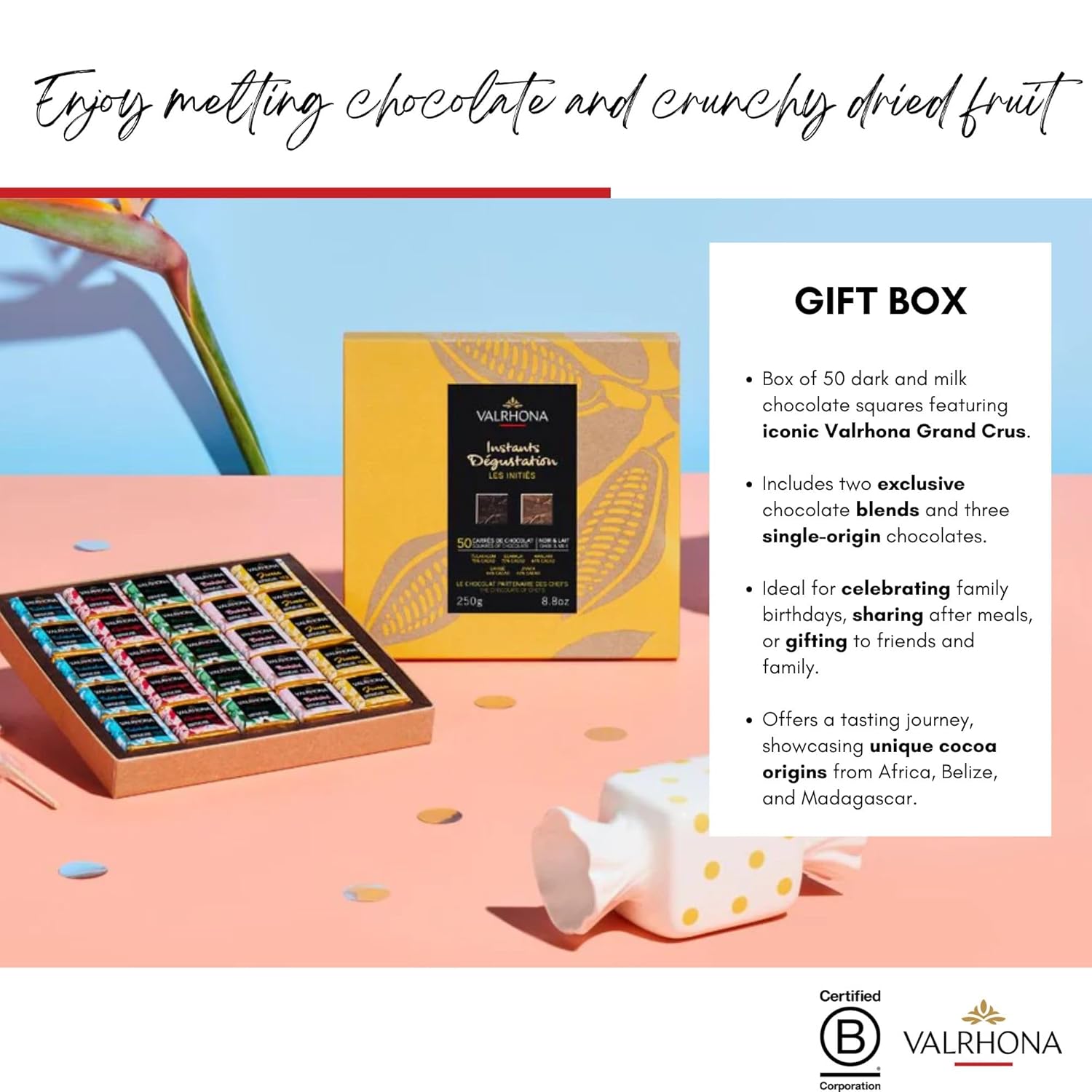
If you’ve ever stood in front of a chocolate display and felt vaguely paralyzed — Valrhona is $12 more than Lindt, Godiva has a pretty bow, and you’re still not sure what any of it actually tastes like — you are in excellent company. “House style” is the shorthand chocolate people use to describe the consistent flavor signature a brand aims for across its entire line. Think of it the way you’d think of a winemaker’s signature: one producer favors bright, tannic reds; another goes round and approachable every time. Chocolate brands work the same way. Valrhona, Lindt, and Godiva each built an identity around a specific flavor profile, a specific customer, and a specific price-to-experience promise. Once you understand those three profiles, you stop guessing and start buying with intention — which is exactly what this article is designed to help you do.
The Three Philosophies, Side by Side
These three brands are not just different price tiers. They are different answers to the question of what chocolate is for.
Valrhona is a French couverture (koo-vehr-TYOOR) house — couverture means a professional-grade chocolate with a higher cocoa-butter content than what you’d find in a typical supermarket bar, designed to melt smoothly and coat evenly. Founded in 1922 in the Rhône Valley town of Tain-l’Hermitage, Valrhona built its reputation supplying pastry chefs and confectioners before most home buyers had heard of it. The house philosophy is origin-forward: each Grand Cru (a borrowing from wine terminology, meaning a “great growth” sourced from a single estate or defined region) is engineered to let the natural flavor compounds of the cacao come through. As Valrhona’s own origin documentation describes it, each grand cru is developed to express a terroir (the environmental character of where it was grown) rather than to conform to a single taste ideal.
Lindt is a Swiss house founded in 1845, and its core promise has always been smoothness — specifically the result of a process called conching, which the company’s founder Rodolphe Lindt pioneered. Conching involves mechanically agitating molten chocolate for many hours, breaking down harsh particles and volatilizing bitter compounds. Lindt’s house style is not about origin complexity; it’s about a particular kind of reliability: creamy, accessible, well-rounded bitterness in the dark bars, pillowy milk chocolate that melts at body temperature without waxy resistance. Per Serious Eats’ ingredient explainer on couverture chocolate, conching time is one of the largest contributors to perceived “smoothness” in finished bars — and Lindt built an entire brand identity around maximizing it.
Godiva is a Belgian brand founded in Brussels in 1926. Its house style is confection-first, not chocolate-first. The emphasis is on the filled piece — the ganache (a smooth, emulsified filling made from chocolate and cream), the truffle, the shell — rather than on the chocolate shell itself. Godiva’s chocolate is the delivery mechanism for a visual and sensory experience centered on occasion and gifting. The house leans into sweetness, approachable flavor profiles (strawberry cream, hazelnut praline, caramel), and packaging that communicates luxury visually before a single piece is tasted. Food & Wine’s annual buying guide consistently positions Godiva in the “gift presentation” tier rather than the “connoisseur tasting” tier — useful to name explicitly because both are legitimate use cases.
Flavor Profiles Decoded: What You Actually Taste
Here’s where the practitioner knowledge becomes actionable. Each house produces a spectrum of products, but the core flavor signature is consistent enough that you can predict the experience before ordering.
Valrhona’s flavor vocabulary runs toward the complex and sometimes polarizing end of the spectrum. The Manjari (64% cacao, Madagascar origin) is widely cited in Saveur’s editorial tasting surveys and in Clay Gordon’s community tasting coverage at The Chocolate Life for its intense red-fruit acidity — think dried raspberry or black cherry. It can read as almost tart on first encounter if your palate is calibrated to smoother European-style chocolates. The Guanaja (70%, multi-origin blend) is the house’s signature workhorse dark bar: bold, slightly astringent, long finish with roasted bitterness. The Dulcey (blond chocolate, 35%) is caramelized and butterscotch-forward — a flavor that has become widely imitated since Valrhona accidentally “invented” it in 2006 when a pastry chef left white chocolate in a bain-marie too long.
The consistent through-line: Valrhona bars reward attention. Reviewers at Bon Appétit’s editorial round-ups note that eating a Valrhona Grand Cru in the same mindset as a candy bar produces mild disappointment; approached as a tasting, the complexity resolves into something memorable.
Lindt’s flavor vocabulary is built around comfort. The Excellence 70% is the house’s flagship dark bar, and across aggregated reviews the pattern is consistent: clean roasted cocoa, moderate bitterness, a finish that doesn’t linger in an aggressive way. It’s designed to be inoffensive in the best possible sense — you’re not going to hand someone a square of Lindt and have them recoil. The milk chocolate line leans toward a cooked-cream note (a mild, sweet dairy quality sometimes described as “European milk chocolate” to distinguish it from lighter American-style bars). The Lindor truffle — a thin shell over a liquid-ganache center — is probably Lindt’s most recognizable product and delivers almost entirely on texture rather than flavor complexity: the shell cracks, the center melts, it’s immediately pleasant.
The consistent through-line: Lindt is the reliable gifting play across a very wide audience. Almost no one dislikes it, and almost no serious chocolate hunter is collecting it.
Godiva’s flavor vocabulary trends sweet, creamy, and filling-forward. The dark chocolate shells in their boxed collections are typically 55–72% depending on the SKU, but they are not meant to be tasted in isolation — they’re structural components around fillings that drive the overall impression. Praline pieces read as nutty-sweet; the caramel pieces are rich and buttery; the ganaches are soft and immediate. The Bon Appétit round-up and Food & Wine’s guide both note that Godiva’s actual chocolate quality has improved meaningfully since the brand’s sale to Yıldız Holding and subsequent reformulation efforts around 2019–2022 — the old criticism that the chocolate tasted waxy is less accurate now than it was a decade ago.
The consistent through-line: Godiva sells the moment, the box, the ribbon. The chocolate is supporting the occasion, not the other way around.
By the Numbers
| Brand | Entry price (bar/piece) | Core cacao range | Primary use case |
|---|---|---|---|
| Valrhona Grand Cru bar | $8–$14 / 70g bar | 64–85% | Tasting, pastry work, connoisseur gifting |
| Lindt Excellence | $4–$7 / 100g bar | 50–99% | Everyday eating, broad-audience gifting |
| Godiva boxed collection | $20–$75 / 12–36 pc. | 55–72% (shells) | Occasion gifting, corporate, visual impact |
The Tradeoff Matrix: Matching House Style to Occasion
This is where intermediate buyers make or lose the call. Each brand is the right answer under specific conditions — none is universally superior.
Choose Valrhona when: The recipient has demonstrated chocolate curiosity (they’ve mentioned single-origin bars, they’ve bought from a specialty chocolate shop, or they explicitly asked for something “interesting”). Corporate gifting that signals taste-level sophistication — say, a client in the food-and-beverage industry — benefits from Valrhona’s professional pedigree. The Chocolate Life’s community coverage notes that Valrhona carries enormous brand recognition within the culinary industry, meaning a gift of Manjari bars reads as “we know what you care about” to a pastry-world audience. The premium spend is justified when recognition value amplifies the gift’s impact.
A 150g Manjari bar at roughly $13–$16 at specialty retail as of May 2026 is genuinely one of the better dollars-per-flavor-complexity ratios in the category. If the budget is tight and the occasion is tasting-focused, Valrhona at $15 beats a Godiva sampler at $40.
Choose Lindt when: The audience is broad and unknown — a holiday party assortment, a stocking stuffer for someone who hasn’t expressed specific preferences, an office supply for a shared bowl. Lindt Excellence assortment packs give you range (dark, milk, flavored bars) with zero risk of flavor-profile mismatch. The per-piece cost stays low enough that volume isn’t punishing. Saveur’s tasting coverage positions Lindt as the benchmark “accessible European” standard — which is exactly what you want when your job is to delight 40 people at a corporate event without a detailed flavor profile for any of them.
Choose Godiva when: The box IS the gift. Anniversary, condolence, milestone birthday, new-client welcome — occasions where the visual unboxing is part of the emotional experience. Godiva’s packaging design team is genuinely excellent; the gold box with ribbon is one of the most universally recognizable “luxury chocolate” signals in the American market. For wedding favors or branded corporate gifts where you’re negotiating minimums and customization, Godiva’s corporate division handles volume and embossing in ways that smaller artisan brands cannot match at scale.
One clear decision rule: if the recipient will spend more than two seconds looking at the packaging before eating the chocolate, Godiva earns its price. If the recipient will unwrap immediately and evaluate the chocolate itself, redirect that budget to Valrhona or, at the higher end, to a maker like Compartés or Recchiuti where the chocolate is the primary event.
The One Mistake to Avoid
The most common intermediate-buyer error is using Godiva as a signal of chocolate seriousness to someone who actually is serious about chocolate. In the broader gifting market, Godiva reads as luxury. In the specialty chocolate community — the audience served by The Chocolate Life, the pastry-chef network, the bean-to-bar enthusiasts — Godiva reads as confectionery, not chocolate. Sending a $75 Godiva tower to someone who orders Valrhona Guanaja by the kilo is not a bad gift, but it is a misread.
The inverse mistake also exists: sending a Valrhona Grand Cru bar to someone who mostly eats milk chocolate and wanted something sweet and fun. They will find it bitter and feel slightly blamed for it.
The clean decision rule: Know whether your occasion is about the chocolate or expressed through chocolate. Valrhona is for the former. Godiva is for the latter. Lindt is for when you need both bases covered without the cognitive overhead.
Once that frame is in place, the price-tier decision becomes much simpler — and the money you spend lands exactly where it was supposed to.