May 17, 2026 • Celeste Marchand • 9 min reading time • Prices verified June 6, 2026
Vegan and Dairy-Free Gourmet Chocolate That Doesn't Taste Like a Compromise
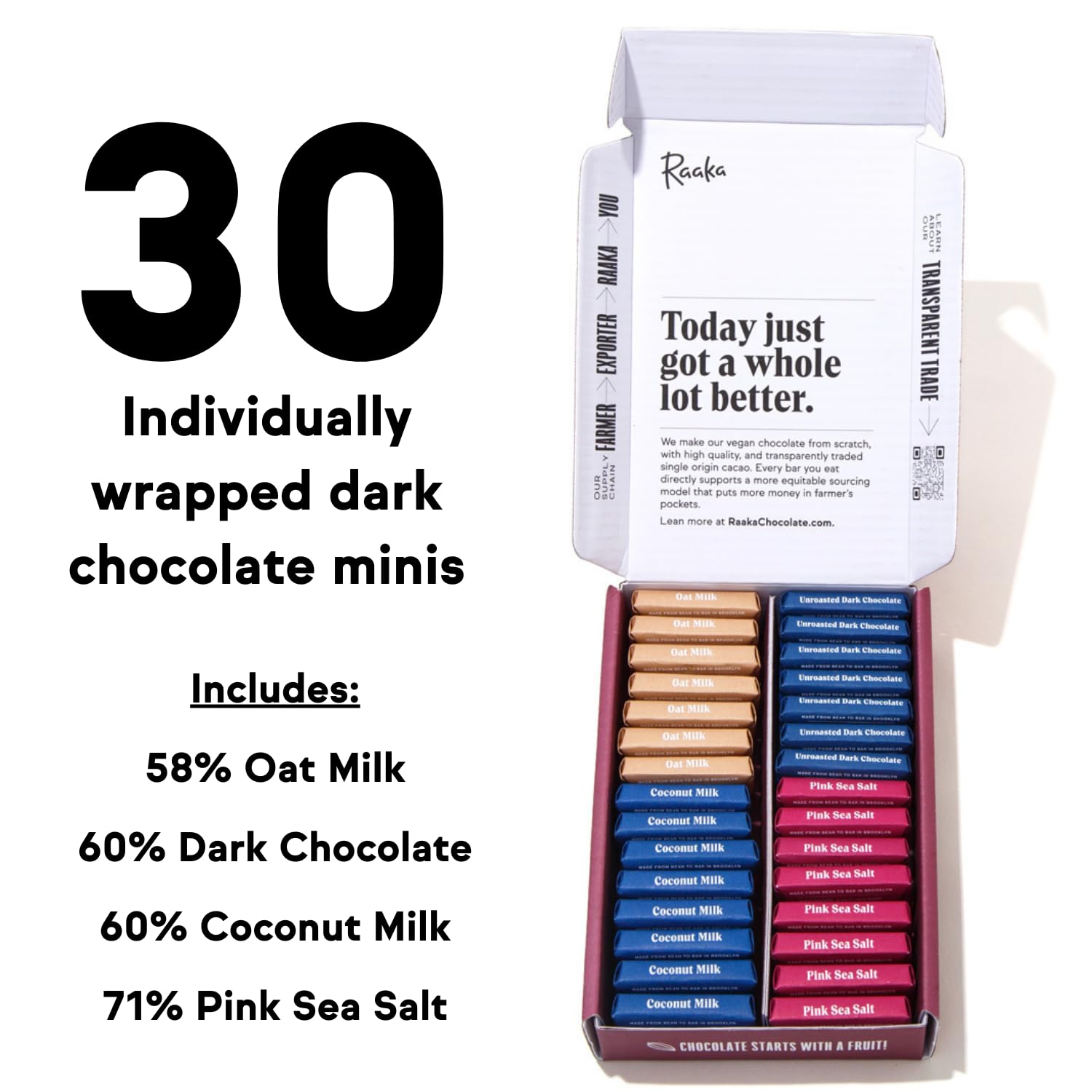
Here’s something that surprises almost everyone who hasn’t looked closely at chocolate labels: real dark chocolate — the kind made from cacao (the seed of a tropical fruit) ground with sugar and nothing else — has never needed dairy to begin with. Milk chocolate, by contrast, gets its creaminess from milk solids or milk powder, and white chocolate (which contains no cacao solids at all, only cocoa butter, sugar, and dairy) is almost entirely defined by its milk content. So when we talk about “dairy-free gourmet chocolate,” we’re really talking about two different problems: dark chocolate that’s already dairy-free if the maker is careful about shared-equipment cross-contact, and the far trickier challenge of making milk-style and white-style bars that actually taste rich and full without the ingredient that traditionally provides that roundness. This guide walks through both, names the makers solving it at a craft level, and gives you a clear decision framework for buying — whether you’re gifting, stocking a hospitality suite, or just eating the thing yourself.
| EDITOR'S PICK[Fames Chocolates Gourmet Gift B…](https://www.amazon.com/dp/B0FNY1PZV8?tag=greenflower20-20) | Mid-tier[Raaka Chocolate Best Sellers Tr…](https://www.amazon.com/dp/B079HDBXGG?tag=greenflower20-20) | Budget pick[TCHO Dark Duo Dark Chocolate Ba…](https://www.amazon.com/dp/B0BHKGZLW3?tag=greenflower20-20) | |
|---|---|---|---|
| Type | Assorted Truffles | Bars (3-pack) | Bars (3-pack) |
| Weight (oz) | — | 5.4 (3×1.8) | 6.3 (3×2.1) |
| Organic | — | ✓ | ✓ |
| Soy Free | — | ✓ | ✓ |
| Kosher | ✓ | ✓ | — |
| Flavors | Caramel, Hazelnut, Crunch, Fudgy, Raspberry, Mango | — | — |
| Price | $50.99 | $26.95 | $18.99 |
| See on Amazon → | See on Amazon → | See on Amazon → |
Why “Dairy-Free” Doesn’t Automatically Mean “Craft”
Let’s be honest about the failure mode first. For years, the vegan chocolate shelf was dominated by bars that achieved dairy-free status by removing milk fat and replacing it with nothing — the result being a thin, waxy texture and a bitterness that wasn’t complexity, it was just absence. Understanding why this happened helps you identify who’s actually solved it.
Conventional milk chocolate leans on dairy for three things simultaneously: fat (which carries flavor and creates mouthfeel), protein (which contributes body and a subtle savory background), and lactose (a sugar that adds its own mild sweetness and affects how the chocolate sets). Strip all three and replace them with nothing, and you have a hollow bar. Replace them well — with high-fat coconut milk, oat milk solids, cashew paste, or rice cream — and you can reconstruct most of what dairy was doing, sometimes adding interesting new flavor dimensions in the process.
Fine Cooking’s overview of chocolate formulation notes that fat content and emulsification are the two biggest drivers of perceived “creaminess” — which is why makers who simply use water-based plant milks without compensating fat sources consistently produce inferior results. The best vegan milk chocolates in 2026 are reformulated from the ground up, not just substituted.
Dark Chocolate: The Simplest Win, With One Real Caveat
If your goal is gifting or personal eating and you’re buying from a craft maker, single-origin dark chocolate (chocolate made from cacao sourced from one country, region, or farm — so the flavor reflects that specific terroir, or place, the way wine does) is almost always dairy-free by default. Makers like Dandelion Chocolate, Fruition Chocolate Works, and Marou (whose bars highlight Vietnamese cacao) typically produce two-ingredient bars: cacao and cane sugar. That’s it.
The caveat that matters at a practitioner level: shared equipment and shared facilities. A maker whose primary line is vegan may run a single-origin 72% bar on the same conching machine (the device that grinds and smooths chocolate over many hours) they use for a milk chocolate inclusion bar. For most dairy-free consumers this is a non-issue; for someone with a true dairy allergy or someone buying for a guest with one, you need to read the allergen statement, not just the ingredient panel.
Saveur’s deep dive on bean-to-bar production points out that small craft producers — the ones most interesting to a single-origin enthusiast — are also the ones least likely to have dedicated allergen-separated lines, simply because they’re working with limited equipment. Larger producers with dedicated vegan lines, paradoxically, sometimes offer cleaner allergen documentation even if their cacao sourcing is less exciting.
Quick reference: Dark chocolate dairy-free confidence by segment
| Maker type | Dairy-free by default? | Dedicated facility? |
|---|---|---|
| Two-ingredient bean-to-bar (craft) | Almost always | Rarely — check label |
| Mass premium (Lindt Excellence 70%+) | Usually | Sometimes — label varies |
| Certified vegan specialist | Yes | Usually — verify |
Milk-Style Alternatives: Where the Craft Gap Is Closing Fast
This is where the interesting buying decisions live in 2026. Oat-based milk chocolate has moved from novelty to legitimate category. Coconut milk chocolate has matured — early versions had an overwhelming coconut flavor that fought the cacao; newer formulations from makers who’ve reformulated with lower-lauric coconut fractions have dialed that back significantly. And cashew milk, which carries a natural buttery fat profile, is producing some of the most “classic milk chocolate” flavor approximations available.
Compartés, the LA-based maker known for theatrical flavor combinations, has expanded its plant-based line using oat-based chocolate couverture (couverture is a high-quality chocolate with a higher cocoa-butter content than standard chocolate, which makes it ideal for coating and fine confectionery). Reviewers across aggregated specialty chocolate communities consistently note that the oat base reads as genuinely creamy rather than watery — the tell that a maker has gotten the fat balance right.
Raaka Chocolate (Brooklyn) built its reputation on unroasted “virgin” cacao — a processing style that preserves more of the cacao fruit’s natural brightness and floral notes. Their oat milk bar applies that same unroasted approach to a dairy-free format, which means the flavor profile skews fruity and slightly tangy rather than the roasted-malt depth of traditional milk chocolate. The Chocolate Life’s editorial coverage of alternative milk chocolates specifically calls out Raaka as a maker whose dairy-free line is a deliberate flavor argument, not just a substitution exercise — if you’re gifting to someone who finds conventional milk chocolate too sweet or one-dimensional, this is a genuinely interesting option.
Loving Earth (Australian maker, available through US specialty importers) is producing coconut-based chocolate that earns consistent praise for its texture. The fat profile from their coconut milk source is reportedly close enough to cocoa butter’s melting behavior that the snap and melt-on-the-palate sensation is nearly indistinguishable from dairy milk chocolate in blind assessments cited by Epicurious in their vegan chocolate roundup.
White-Style: The Hardest Problem, With One Clear Answer
White chocolate without dairy is technically just cocoa butter, sugar, and a flavoring agent — and for most of its history, dairy-free white chocolate was either hyper-sweet (when it leaned on plain sugar for body) or tasted of coconut (when it leaned on coconut fat). The category lagged behind dark and milk alternatives by at least five years.
The solution most serious makers have converged on: oat powder plus a small amount of cashew fat, which together approximate the protein-sugar-fat triangle that milk solids were providing. Lagusta’s Luscious (New Paltz, New York), a certified vegan confectionery, makes white chocolate bonbons using this formulation, and owners who’ve ordered their holiday collections consistently report a flavor that reads as genuinely buttery rather than just sweet. It’s not identical to a Valrhona Ivoire (a benchmark dairy white chocolate), but it’s a real chocolate confection rather than a candy coating.
If you’re a hospitality buyer specifying dairy-free options for an event, white-style chocolate is where you need to communicate clearly with your maker about formulation, not just certification. Ask specifically: what is the fat source, what is the protein source, and does it share a line with dairy white chocolate? Those three questions will tell you more than a “vegan” stamp alone.
Decision Framework: Matching the Right Pick to Your Actual Situation
By the numbers — current market positioning as of May 2026:
- Entry vegan dark bar (craft, 2-ingredient): $8–$18
- Artisan oat-milk or cashew-milk bar: $14–$28
- Vegan bonbon collection (6–12 piece): $28–$65
- Custom-enrobed vegan truffle sets (corporate/event minimums): $6–$14 per piece at volume
If you’re buying a gift for someone dairy-free who already loves chocolate: Start with a two-ingredient single-origin dark bar from a bean-to-bar maker. Marou’s Vietnam bars ($12–$18) are widely available through US specialty retailers and ship well; the flavor is distinctive enough to be interesting to a chocolate-experienced recipient without being challenging to someone newer to craft chocolate. Don’t overthink it — dark chocolate done well is the safest, most satisfying play.
If you’re buying for someone who says they “don’t like dark chocolate” but needs dairy-free: This is the oat-milk category. Look at Compartés’ plant-based line or Raaka’s oat milk bar. The goal is to find them something that hits the sweetness and creaminess notes they associate with conventional milk chocolate. Be realistic: if they want a Cadbury Dairy Milk analog, manage that expectation — these are better in different ways, not identical.
If you’re a corporate buyer sourcing for an event with dairy-free guests: Get ahead of this by at least 6 weeks if you need custom branding or custom flavors. The vegan couverture supply chain has fewer large-volume suppliers than conventional chocolate, which means specialty confectioneries sometimes have longer lead times for plant-based runs. Bon Appétit’s coverage of craft confectionery production specifically notes that custom dairy-free collections require earlier specification than comparable conventional orders — budget the time accordingly.
If you’re evaluating for allergen safety, not just ingredient preference: The only defensible position is requesting the allergen documentation directly from the maker. A certified vegan label tells you about the formula, not the facility. Call or email; reputable makers will have this on file.
The Maker Shortlist Worth Knowing
Based on published coverage, aggregated reviewer consensus, and publicly available sourcing information — not any hands-on evaluation — these are the names that come up consistently when practitioners in the specialty chocolate space discuss dairy-free quality:
Raaka Chocolate — for unroasted, flavor-forward dark and oat-milk bars with genuine terroir character. Available direct and through specialty retailers.
Compartés — for dairy-free milk-style bars and gift collections that photograph well and carry recognizable brand equity, useful if you’re gifting to someone who responds to presentation.
Lagusta’s Luscious — for fully vegan bonbon collections including white-style chocolate, certified, and designed by a team that treats vegan confectionery as a first-principles craft problem rather than a retrofit.
Loving Earth — for coconut-based chocolate with above-average texture fidelity to dairy originals, available through import specialty retailers in the US.
Endangered Species Chocolate — the most accessible price point with reliable allergen labeling and a dark chocolate range that’s widely certified dairy-free, useful when you need volume at a lower per-unit cost without sacrificing reasonable quality.
The category has genuinely matured. The days when “vegan chocolate” was a warning label are over at the craft tier — what’s left is the same work of matching maker to occasion, flavor profile to recipient, and budget to realistic quality expectations that guides every good chocolate purchase.